Carbon farming turns land management into measurable climate value
Carbon farming rewards agricultural practices that remove carbon from the atmosphere, improve soil health, and generate verified environmental value.
For companies, it creates credible insetting and supply chain decarbonization opportunities. For landowners, it can create new long-term revenue streams. For both sides, carbon farming links sustainability goals with measurable real-world outcomes.

Exploring how carbon markets could fit your strategy?
Speak with our team to understand where to start.
What is carbon farming?
Carbon farming is the use of agricultural practices that increase carbon storage in soil or vegetation while reducing emissions from farming operations.
Common examples include:
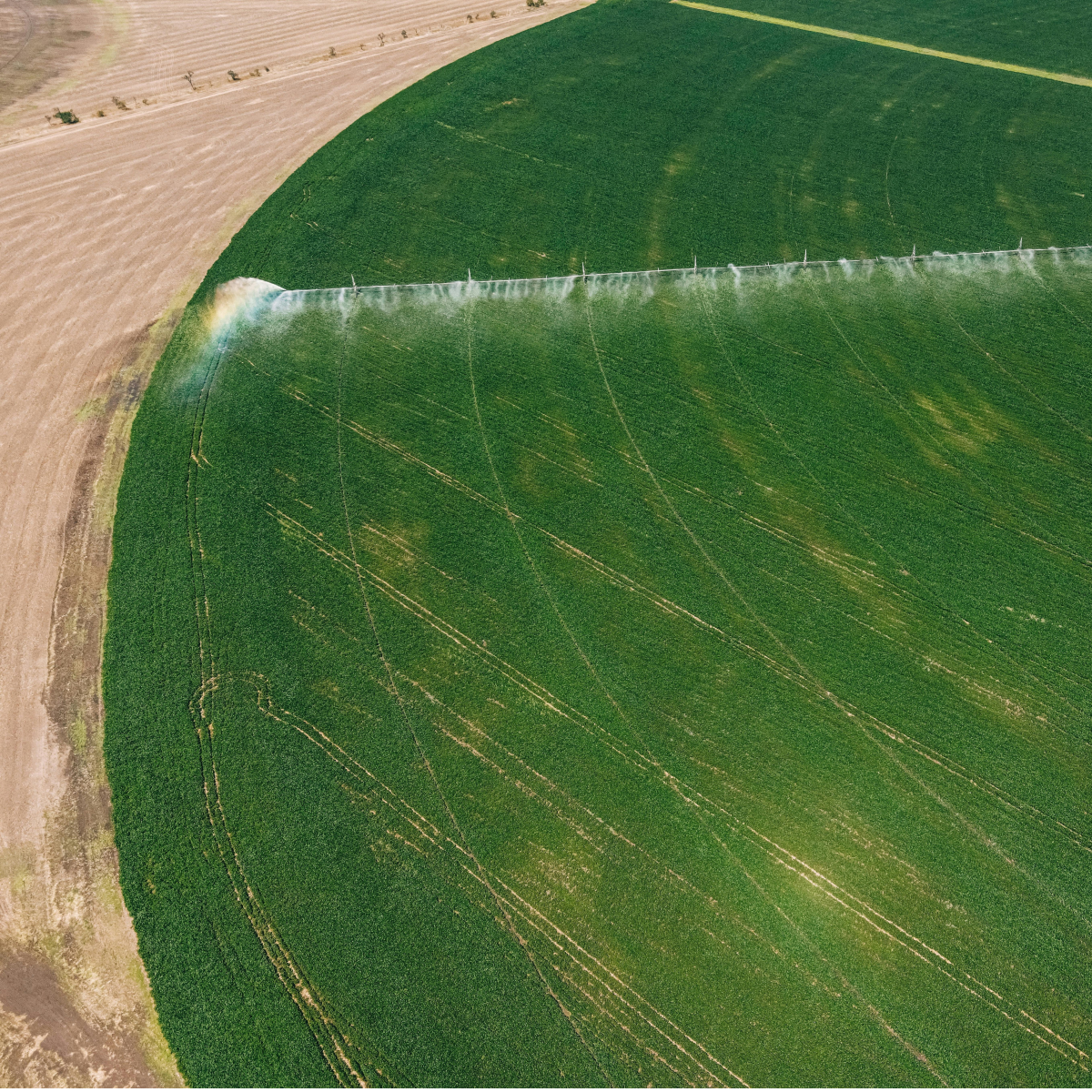
Cover cropping
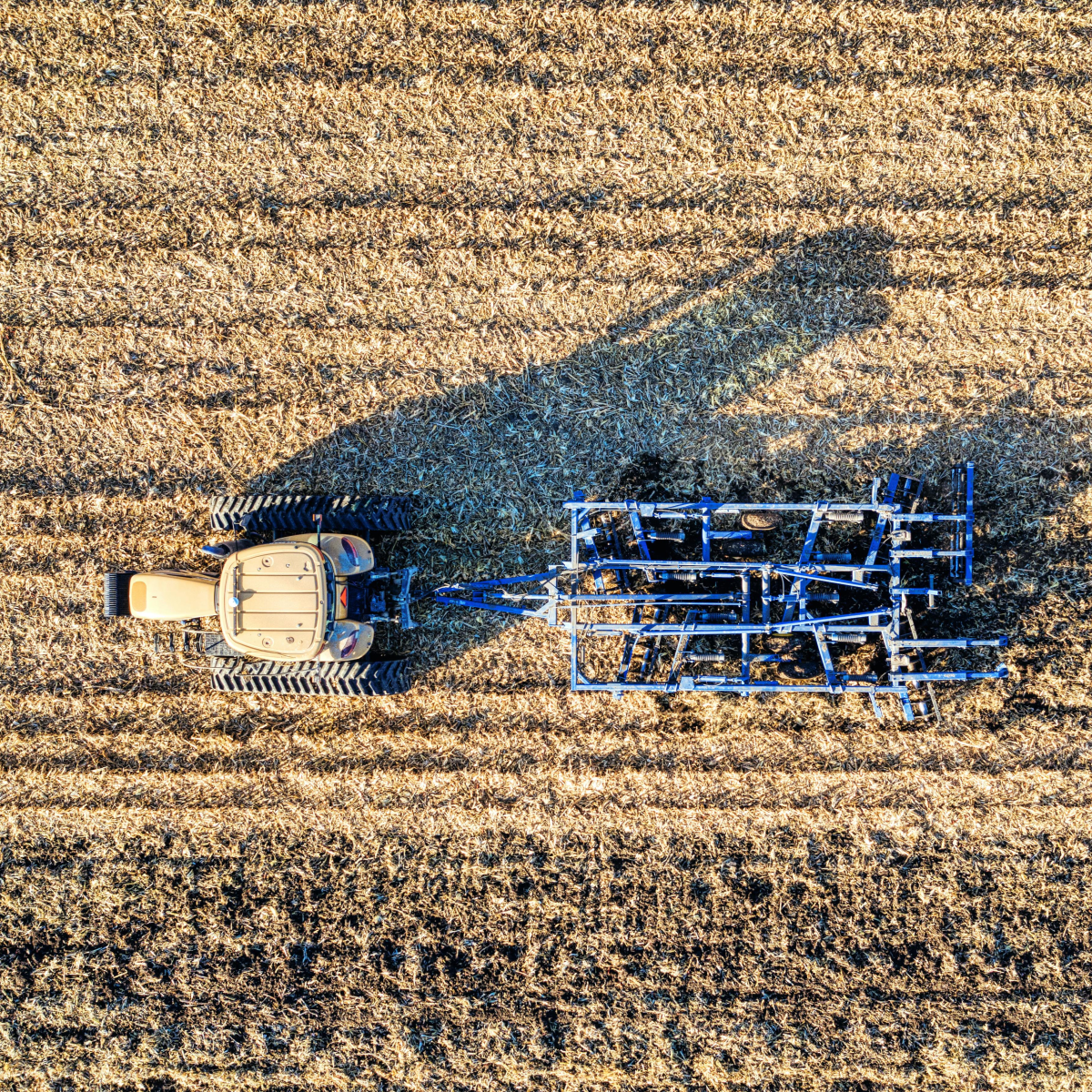
Reduced tillage
Agroforestry
Rotational grazing
Improved nutrient management
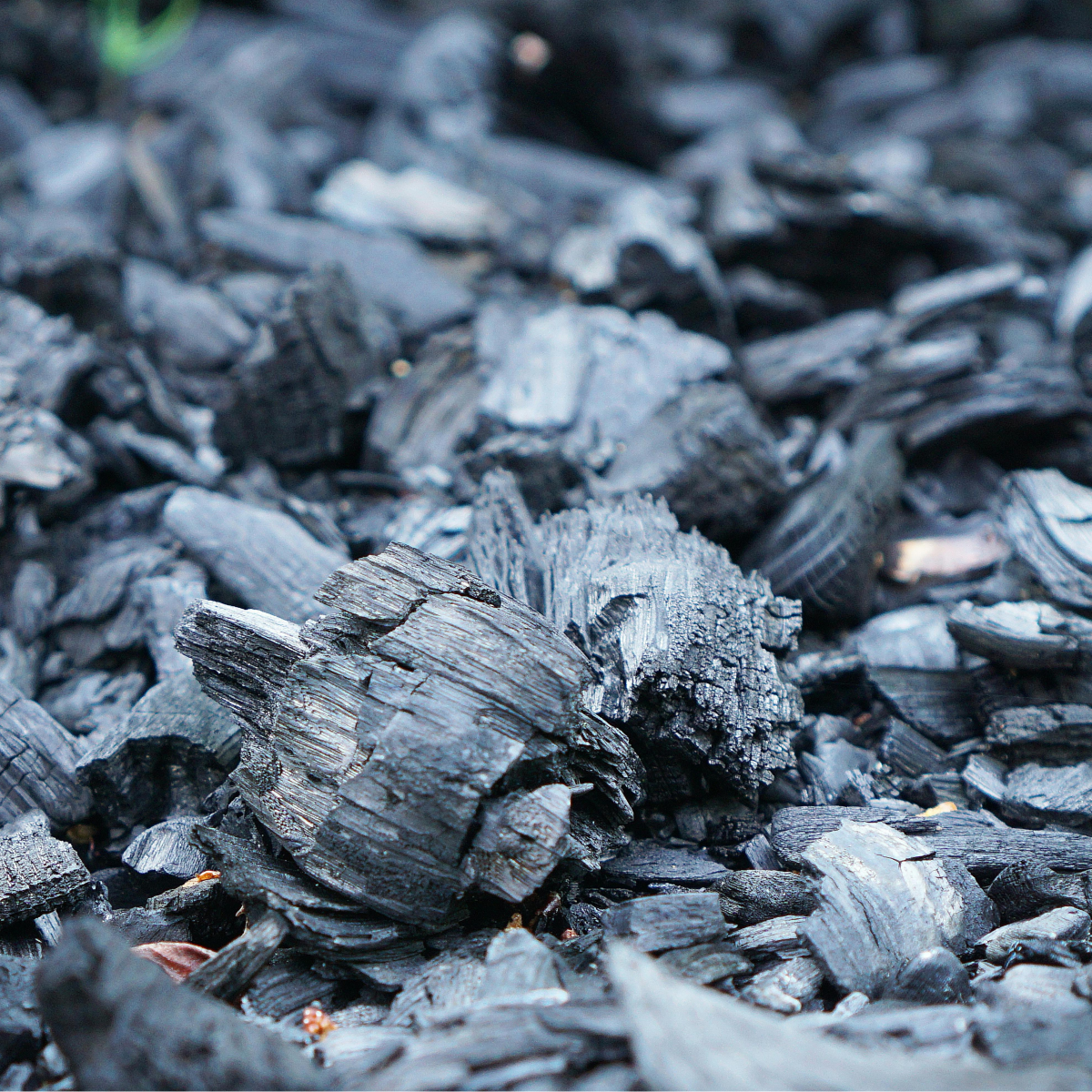
Biochar application
These practices can improve productivity while creating measurable carbon benefits.
Carbon farming connects agricultural performance with measurable climate impact.
Learn how these practices can support both productivity and long-term sustainability goals.
How does carbon farming create business value?
Carbon farming can reduce Scope 3 emissions while strengthening agricultural supply chains.
See how Mitigia turns climate action into measurable business value.
They are already benefiting from carbon credits generated by their green investments
Our Clients
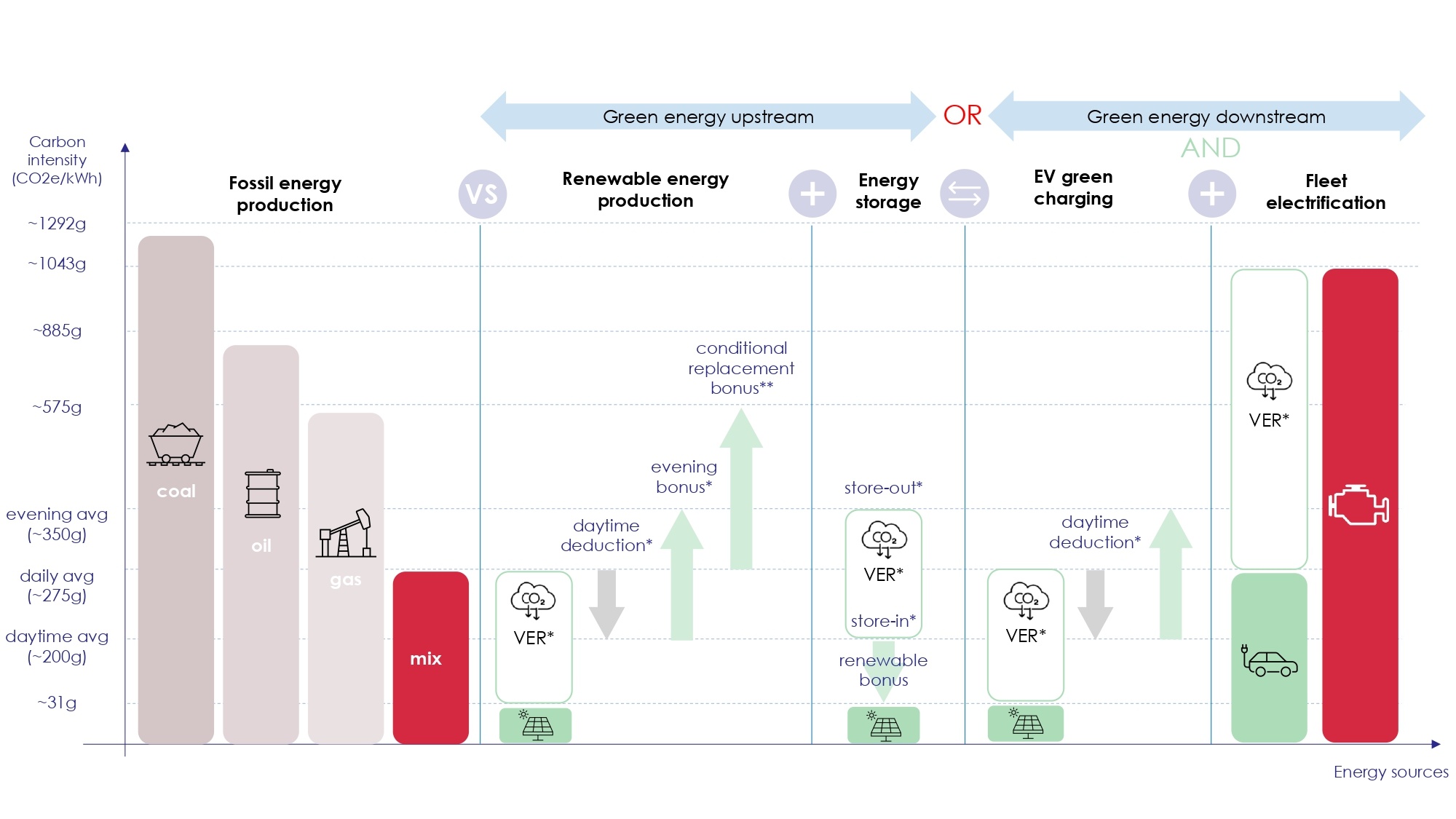
Four main obstacles hinder the spreading of electrification:
the renewable energy production challenge,
the energy storage challenge,
the charging challenge
and last, the EV challenge.
We target all of them with methodologies that built upon each-other.


.png?width=120&name=energy%20storage%20feh%C3%A9r%20ikon%20(1).png)
Can farmers earn revenue from carbon farming?
Yes. Farmers and landowners can generate revenue when measurable outcomes are converted into verified credits or paid sustainability programs.
Carbon farming can create new income opportunities alongside long-term soil and productivity benefits.
Speak with us to explore what a viable program could look like for your operation.
How are carbon farming results measured?
Carbon farming outcomes are measured through baseline assessment, activity monitoring, soil data, modelling, and verification systems.
Our methodologies complement each other
...and cover the whole of the electrification ecosystem from renewable energy production to fleet electrification projects.

MONETIZE YOUR EMISSIONS REDUCTIONS
What is a carbon credit?

When you replace a CO2 intense technology with a more climate friendly or even a net zero one, you "spare" CO2 emissions. Thus, you, as an economic entity, realise a so called carbon gain. By comparing the two technologies, the volume of this carbon gain can be precisely measured, verified and reported, and exchanged into Verified Emission Reduction (VER) or Voluntary Carbon Unit (VCU).
What appears as a „spared" or "negative emission” on the green investors' side is sought after by net emitters whose emission volumes exceed the regulatory limits (and cannot avoid or reduce by themselves). These emitters either pay a penalty fee or buy carbon credits in exchange for their emissions. By choosing the second option they turn their ESG obligations into an opportunity to invest in green investments.
mitigia helps green investors originate and register carbon credits based on their electrification investments, and sell such carbon credits to large emitters.
Our know-how is compliant with the requirements of the VCM, thus the carbon credits originated through mitigia’s methodology qualify as high integrity carbon credits.
These credits represent a higher quality for the buyers, who are willing to pay a higher price for the reliability and transparency of the underlying projects the credits were originated from.

Our Partners
Insetting Over Offsetting
Carbon farming vs offsetting: what is better?
Carbon farming can be stronger than generic offsetting when it is connected to a company’s own agricultural value chain.
For food, beverage, textile, and biomass-linked businesses, supporting suppliers through carbon farming creates direct Scope 3 reduction opportunities. This often delivers stronger credibility than purchasing unrelated external credits.
Which companies should explore carbon farming?
If agricultural sourcing is part of your footprint, carbon farming may be one of the highest-leverage decarbonization tools available.
Carbon farming can help reduce supply chain emissions while strengthening sourcing resilience and sustainability performance.
Talk to us about building a strategy tailored to your agricultural footprint.
How long does a carbon farming program take?
Most programs begin with feasibility and baseline assessment, followed by farmer onboarding, implementation, monitoring, and annual verification cycles.
Early operational benefits may appear within the first season, while credit issuance usually requires longer measurement periods depending on methodology.