mitigia

professional advisory, project development & sourcing solutions for companies navigating the carbon market


Jász-plasztik
Nagy napelempark_1
Carport_aerial_picture
Mercedes_aerial_picture
Warehouse34_aerial_picture
Nagyréde_1-min

Jász-Plasztik - Solar Program

General information


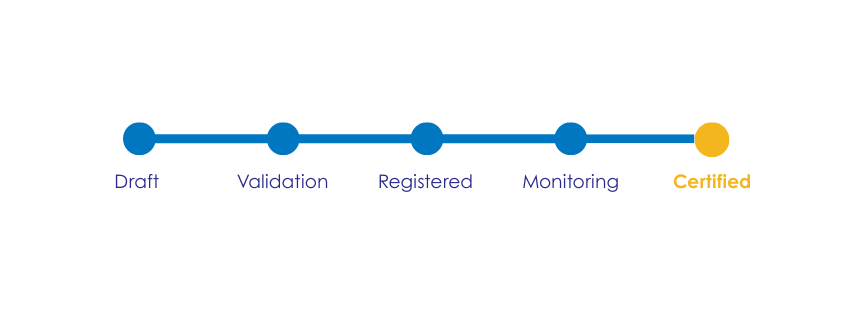
Project stage

project status

VVB & Registry

green cross
ouroffset-1

Description

Jász-Plasztik has taken a strategic step toward reducing its environmental footprint by installing solar panels across its production facilities. This investment in renewable energy reflects the company’s long-term vision: lowering reliance on fossil fuels and contributing to a cleaner energy mix.

To further strengthen the impact of these measures, Jász-Plasztik partnered with mitigia and joined the Mitigia Carbon Crediting Program. Through this collaboration, the avoided emissions generated by renewable energy are converted into quality carbon credits.

The decision to create carbon credits was driven by a dual purpose. On one hand, it ensures that the environmental benefits of solar investments are fully quantified and certified. On the other, it allows like-minded companies to offset their own emissions in a transparent and reliable way.

Mitigia credits stand out for their uniform methodology, consistent verification, and cost-efficient project pooling framework. For buyers, this translates into confidence, clarity, and measurable ESG impact.

For Jász-Plasztik, installing solar panels was only the beginning. The company is committed to expand the volume of its green investments beyond its carbon footprint to a broader effort toward a low-carbon future.

The Carbon Accounting Model

HOLOFON Zrt.'s carbon accounting model measures the environmental impact of genuine and comprehensive open-loop plastic recycling activities based on strict circular economy principles. The resulting emissions reductions is based on two main elements - the avoided emissions of virgin material production and the avoided carbon footprint of alternative waste management such as incineration or landfilling.
 
The model only takes into account recycling volumes where the processor has acquired accounting rights over the incoming waste material flows either by purchasing the waste or receiving a waiver from the entitled legal person. It only accounts processes where incoming waste have been transformed both physically and legally, ceasing to be waste as end products.
 
The carbon calculation applies exclusively to these secondary raw materials as end products successfully reaching “end-of-waste” status, but only to the extent that the degree of processing demonstrably exceeds the minimum legal requirements on a voluntary basis.
 
In the case of recycled end products, the general deterioration in material and function (downcycling) compared to virgin materials was also taken into account as a factor reducing the result.

Issued units

0
total VCUs
0
available VCUs

Sectors

Renewable Energy / Solar Power 

Location

Hungary, Europe

Details

Program ID:  1L1-6UA-GD34 
Project type: Green energy production (solar power plant operation)
Monitoring period: 2022.10.21.-2024.06.30
Signature date: 2024.10.14
Type of receiver: End-user
Status of issuance: VCU (Verified Carbon Unit)
Underlying standard: international Carbon Cycle, Quality Technology Change Standard v2
Methodology: Post-financing of investments in Green Energy production by issuing Carbon Credits


Documentation


Interested in becoming an issuer of carbon credits?

Book a commitment-free call with our experts!